New ACP Letter: Impact on cloud properties of reduced-sulphur shipping fuel in the Eastern North Atlantic
22 January 2026
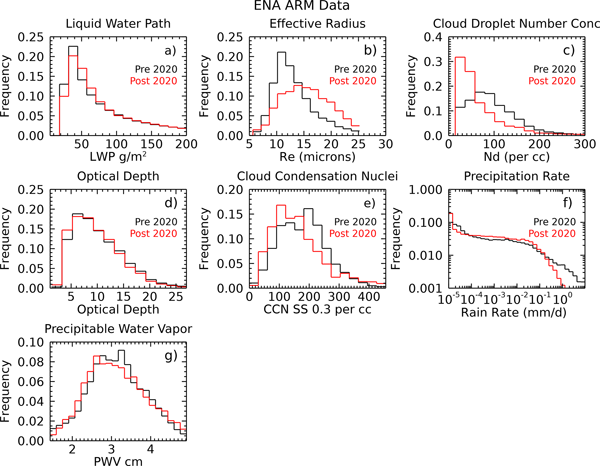
The amount of sunlight reflected by marine boundary layer clouds in the Eastern North Atlantic does not change due to a decrease in aerosol caused by reduced sulphur in shipping fuel because adjustments to liquid water path offset the decease in cloud droplet number concentration.
Executive editor's statement: Following the 2020 global reduction in shipping fuel sulphur, a natural experiment revealed significant changes in marine boundary layer (MBL) cloud properties over the Eastern North Atlantic. These new observations show a ~15% drop in cloud condensation nuclei, leading to fewer but larger cloud droplets. Normally, this would change how clouds reflect sunlight, but an increase in liquid water path (LWP) counteracted these effects. As a result, cloud optical depth and albedo changed very little. Simultaneous shifts in large-scale meteorology, including weaker inversion strength and increased dry air mixing, further complicated attribution of the observed cloud changes. The study suggests that overall, the cooling influence of marine boundary layer clouds seems to be weakening with implications for future climate feedbacks.
Contact: Gerald G. Mace (jay.mace@utah.edu)